Tuesday, November 9, 2021

Wednesday, Nov 10, Day 2 Born a Crime: Immorality Act of 1927


Important takeaways from the act that impacted Trevor Noah's life?

What are miscegenation laws?

The following information has been excerpted from Teen Vogue magazine

Starting in the late 1600s, miscegenation laws — which banned black people and, in some cases, other non-white groups from marrying or having sex with white people — were put into effect.

To understand these laws, it is critical to understand the ways in which people of color in the U.S. have been dehumanized, tortured, and exploited for centuries. Like Jim Crow laws, which were established in the late 19th century, miscegenation laws aimed to uphold the false sanctity of whiteness while simultaneously disenfranchising an entire group of people. Although slavery had been abolished, the belief that black people are inherently inferior to whites was still deeply embedded into American society.


It wasn’t until 1967 that the Supreme Court ruled that state miscegenation laws were unconstitutional in the landmark case Loving v. Virginia. "The freedom to marry, or not marry, a person of another race resides with the individual," wrote Chief Justice Earl Warren, "and cannot be infringed by the State." However, decades passed before every state in the U.S. adopted the law of the land: only in 2000, the last hold out, Alabama, eliminated the (non-enforceable) rule.


1. Trevor Noah's father was Swiss. 

2. He was liable for up to five years imprisonment for "illicit (illegal by law) carnal intercourse with Trevor's mother.

3. Trevor Noah's mother was a Xhosi. 

4. Trevor Noah's mother "permited" a Swiss (European) male to have "illicit (forbidden by law)" carnal intercourse with his father, so she was liable for up to four years in prison.

VOCABULARY ROOTS
miscegenation laws

gen- people
mis- not
gyn-female
anthro- human
ologist- study of


1. misanthrope
2. misogynist
3. anthropologist
4. anthropomorphism
5. gynocologist


The genius of apartheid was convincing people who were the overwhelming majority to turn on each other. Apart hate, is what it was. You separate people into groups and make them hate
one another so you can run them all.

At the time, black South Africans outnumbered white South Africans nearly five to one, yet we were divided into different tribes with different languages: Zulu, Xhosa, Tswana, Sotho,Venda, Ndebele, Tsonga, Pedi, and more. Long before apartheid existed these tribal factions clashed and warred with one another. 

Then white rule used that animosity to divide andconquer. All nonwhites were  systematically classified into various groups and subgroups. Then these groups were given differing levels of rights and privileges in order to keep them at odds.

Perhaps the starkest of these divisions was between South Africa’s two dominant groups, the Zulu and the Xhosa. The Zulu man is known as the warrior. He is proud. He puts his head down and fights. When the colonial armies invaded, the Zulu charged into battle with nothing but spears and shields against men with guns. The Zulu were slaughtered by the thousands, but they never stopped fighting. The Xhosa, on the other hand, pride themselves on being the thinkers.


 My mother is Xhosa. Nelson Mandela was Xhosa. The Xhosa waged a long war against the white man as well, but after experiencing the futility of battle against a better armed foe, many Xhosa chiefs took a more nimble approach. “These white people are here whether we like it or not,” they said. “Let’s see what tools they possess that can be useful to us.
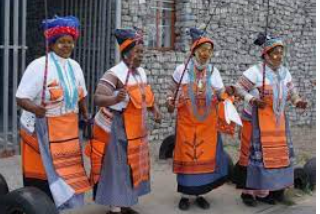


Instead of being resistant to English, let’s learn English. We’ll understand what the white man is saying, and we can force him to negotiate with us.”

The Zulu went to war with the white man. The Xhosa played chess with the white man. For a long time neither was particularly successful, and each blamed the other for a problem
neither had created. Bitterness festered. For decades those feelings were held in check by acommon enemy. Then apartheid fell, Mandela walked free, and black South Africa went to war
with itself.


Choose one of the following and respond in a complete sentence on the back of your 3 x 5 card.

1. Why might it be a politcally wise move to set people up against each other?

2. Why under apartheid were groups systematically classified?

3. How did the Zulu people handle the Europeans, in constrast to the Xhosa people?

4. Noah states that with the fall of apartheid,"South Africa went to war with itself?" What does he mean?


Monday, November 8, 2021

Tuesday, November 9 Day 1 Born a Crime

  In class: we are reading Trevor Noah's autobiography, Born a Crime.

Some of the book will require outside reading, but will be available here on the blog.  If you are absent, make sure you keep up to date with the reading.  Primarily class time will be spent responding to the Trevor Noah's experiences.


In class: a short video from The Daily Show. (5:20)

Trevor Noah, the man himself


To have a better understanding of the book, it is important to have understanding of South Africa's system of apartheid and its historical legacy. Most importantly, is to understand Nelson Mandela's importance in South Africa, particularly his role in ending apartheid and how race and racism functioned in South Africa. This will help you understand how people were placed in racial categories and treated based upon this category. This, of course, had a devastating effect on people. 

We will be exploring some challenging topics through pictures and prompts from the media as a constructive point for critical thinking.  The expectation is that what we write and say will always be respectful. 


7:33

Notebook entry.
Please write a thoughful response to the following two questions, based upon your having viewed the two class videos. Label the page: Day 1 Born a Crime

1. Perhaps you are familiar with the South African comedian Trevor Noah from The Daily Show. He is both a wit and a satirist.  Having watched an excerpt from The Daily Show, what are your initial thoughts about Trevor Noah? What tecniques is he using to voice his opinion?

2. Briefly explain how apartheid worked in South Africa.

Sunday, November 7, 2021

Monday, Nov 8 semicolon usage


When to Use a Semicolon


The following assignment is the first grade for the second marking quarter

 Directions:

 1. Watch the video at least two times

semi-colon video 2:37 


2. Read over the following chart.


3. COLLECT YOUR handout from the substitute

4. Write your name on the top of the page the period number of your class.

5. Complete the assignment and turn in.

6. Thank you.


Thursday, November 4, 2021

Thursday, Nov 4 Ozymandius written reflection...bonus work


Please collect your notebooks or, if you are at home, as there is no class, you may send this along as a google doc

dorothy.parker@rcsdk12.org

This is the last assignment for this marking quarter. I am counting this as bonus work. 

Due today!


In Shelley’s poem Ozymandias’ statue has the inscription, “Look on my works, ye Mighty, and despair!” yet there is nothing but sand and ruins. How much control does one have over how we are remembered in the future? What could Ozymandias have done while he lived that might’ve helped towards the preservation of his statue? Personal response (do not start with I!; minimum 150 words.

Ozymandias by Percy Bysshe

1. I met a traveller from an antique land,
Who said—“Two vast and trunkless legs of stone
Stand in the desert. . . . Near them, on the sand,
Half sunk a shattered visage lies, whose frown,
5. And wrinkled lip, and sneer of cold command,
Tell that its sculptor well those passions read
Which yet survive, stamped on these lifeless things,
The hand that mocked them, and the heart that fed;
And on the pedestal, these words appear:
10. My name is Ozymandias*, King of Kings; 
Look on my Works, ye Mighty, and despair!
Nothing beside remains. Round the decay
Of that colossal Wreck, boundless and bare
The lone and level sands stretch far away.”

Wednesday, November 3, 2021

Wednesday, November 3 Ozymandius

IMPORTANT:  Please check your grades. If I missed putting in an assignment that you sent, please resend to  dorothy.parker@rcsdk12.org   Grades for this quarter end tomorrow. That allows for the extended time you have had to turn in missing work.

Notes on your The Very Old Man with Enormous Wings essay.

Capitalization!

                   Note that you only had to copy the heading

Italics:        On line, you must use italics anytime you write                                the title of a short story, poem, play or novel.

Avoid:         Repeating the title and author after the introductory                       paragraph. Use the author's surname, if needed.

Bolding:      Do Not!

Subjunctive:    If I were, not if I was

Conclusion:    Do not repeat the introduction; you must                                          conclude with a "big idea": what message should                            be taken away from the essay? Universalize!

Specific to this:   Beliefs are part of everyone's life

Honors:              You must have text woven in

Spacing:             Evenly double space throughout the whole                                      document.

Never:                 In the beginning or at the end. These                                                 are fillers.  Set the scene: when...

Never:                reference the reader. This is not a 19th century                               novel.

Never:               "We": this is not a group conversation or                                            "you think", "you know"

Supposed to:      Write on one of the themes that was given!

Make sure":      For me to edit, always send to dorothy.parker                                  @rcsdk12.org  NOT to the 200660


 Today's work is the last grade for this quarter.


Learning targets:  I can demonstrate an understanding of figurative language, word relationships, and nuances in word meanings.

                              I can evaluate a speaker’s point of view, reasoning, and use of evidence and rhetoric; identify any fallacious reasoning or exaggerated or distorted evidence. 

Ozymandius by Percy Bysshe Shelley


Percy Bysshe Shelley, who lived from 1792-1822, was an important poet during a literary and artistic period that’s known as the era of English Romanticism. He is regarded by some as one of the most influential poets in the English language. Ozymandias is one of his best-known works.  

Vocabulary
.1. visage (noun) : a person’s face, with reference to their expression
 2.

Ozymandias is another name for the pharaoh Ramses II who ruled Ancient Egypt from 1279-1213 BCE.

3. colossal (adjective) : extremely large

Colossus of Rhodes


Ozymandias by Percy Bysshe

1. I met a traveller from an antique land,
Who said—“Two vast and trunkless legs of stone
Stand in the desert. . . . Near them, on the sand,
Half sunk a shattered visage lies, whose frown,
5. And wrinkled lip, and sneer of cold command,
Tell that its sculptor well those passions read
Which yet survive, stamped on these lifeless things,
The hand that mocked them, and the heart that fed;
And on the pedestal, these words appear:
10. My name is Ozymandias*, King of Kings; 
Look on my Works, ye Mighty, and despair!
Nothing beside remains. Round the decay
Of that colossal Wreck, boundless and bare
The lone and level sands stretch far away.”

Group discussion questions:
1. Read over the poem again
2. What is the theme or the controlling idea? What specifically in the text led you to that conclusion?
3. Irony: The definition of irony as a literary device is a situation in which there is a contrast between expectation and reality. For example, the difference between what something appears to mean versus its literal meaning.

    What irony do you observe in Ozymandius?

Be prepared to share :)

Independent work below. Copy the following questions on a google doc and share, as usual: 

 (don't forget to give me editing rights!)


Part 1:

Highlight the correct response
 Irony

1.    What does the traveler describe to the speaker?

 A.    A tall forest in a desert 

   B.    A broken statue in sand 

C.    Smashed glass in the sand

D.    A desert with abandoned techniques

   2. How does the traveler describe the expression on the statue?

A. as compassionate  

B.  as frightened 

C.   as thoughtful

 D. as arrogant

 3. What does the traveler describe to the speaker?

A. A tall forest standing in a desert

B.A broken statue lying in sand

C. Smashed glass sunken in the sand

D. A desert with abandoned antiques


4. Part A: Which statment best expresses the theme of this poem?

A. Ancient rules are an important part of history

B. People are easily corrupted by pride

C. Be wary of the stories travellers tell

D. Power and greatness will not last forever


5. Part B: 

Which selection from the text best develops the theme in Part A.

    A. I met a traveller from an antique land,

Who said—“Two vast and trunkless legs of stone
Stand in the desert. 

B. And wrinkled lip, and sneer of cold command,
Tell that its sculptor well those passions read
Which yet survive, stamped on these lifeless things,

C. And on the pedestal, these words appear:
 My name is Ozymandias*, King of Kings;

D. Look on my Works, ye Mighty, and despair!
Nothing beside remains. Round the decay

6. What is the effect of the speaker hearing about this statue from someone else, as oppossed to seeing it with his own eyes?

A. It helps emphasize how the story has been passed on and the reader should doubt the reliabilty of the description
B. It emphasizes how powerful the king was and how much his legend continues to impact culture.
C. It helps emphasize how the story is a tale that is being passed on to the reader, indicating that there is a message to be heeded.
D. It demonstrates the readers susceptability to the influences of others.

7. For what reason did the author include the inscription on the statue:"Look on my works ye Mighty and despair!"

A. It lets the reader know that Ozymandius was a cruel leader.
B. It emphasizes the contrast between the king's arrogance and the ruin his statue has become.
C. It demonstrates the negative attitude the sculptor had about the king.
D. It compares Ozymandius to other famous kings by alluding to the classic Arthurian legend.

Sunday, October 31, 2021

Monday, November 1 September Morn


11-12R2: I can determine two or more themes or central ideas in a text and analyze their development, including how they emerge and are shaped and refined by specific details

11-12R4 I can determine the meaning of words and phrases as they are used in a text, including figurative and connotative meanings. Analyze the impact of specific word choices on meaning, tone, and mood.

11-12W2c: I can precise language, content-specific vocabulary and literary techniques to express the appropriate complexity of a topic. 

11-12W2d: I can use appropriate and varied transitions and syntax to make insightful connections and distinctions, create cohesion, and clarify relationships among complex ideas and concepts


Essential question: How do figurative language devices-imagery, personification and apostrophe- contribute to a poem?


George Marion McClellan (1860-1934) was a minister, teacher, fiction writer, and distinguished African American poet. He is best known for his two poetry collections, Songs of a Southerner and The Path of Dreams. In this poem, the speaker describes a September night in Anguilla, Mississippi

Share with!!! dorothy.parker@rcsdk12.org

Vocabulary

rankish- growing excessively or out of control

begirt-surrounded by; encompassing*


Anguilla-a town in Mississippi


dapple- marked with rounded spots of color


muscadine-a grapevine species native to the South


katydids-an insect, also called a bush cricket, known for its loud

 mating calls.


bayou-(noun) in the souther US a marshy outlet of a lake or river

 (see picture above.)


Directions: We will read the poem three times as a class

                   Note the sound of the words
                  
                   Note the varied imagery: (seeing (visual)

                                                           hearing (auditory)

                                                           smelling (olfactory)

                                             tasting (gustatory)
                                                            feeling  (sensory)  

(Be prepared to identify the types of imagery.)


Copy and paste the poem and the questions onto a google doc. MAKE SURE THAT YOU GIVE ME EDITING RIGHTS!!!!!
             1. Answer the five questions, highlighting the correct response
             2. Respond to the use of personification within the poem, listed as number 6.
(personification is defined as a literary device that assigns human qualities and attributes to objects or other non-human things.)  Parts 1 and 2 will count as a class participation grade.)

                DUE BY 3 pm on Tuesday, November 2
                        
                       
 September Night by George Marion McClellan


(1)The full September moon sheds floods of light,

And all the bayou’s face is gemmed with stars,

Save where are dropped fantastic shadows down

From sycamores and moss-hung cypress trees.

(5)With slumberous sound the waters half asleep

Creep on and on their way, ’twixt rankish .reeds,

Through marsh and lowlands stretching to the Gulf.

Begirt with cotton fields, Anguilla sits

Half bird-like, dreaming on her Summer nest.

(10) Amid her spreading figs and roses, still

In bloom with all their Spring and Summer hues,

Pomegranates hang with dapple cheeks full ripe,

And over all the town a dreamy haze

Drops down. The great plantations, stretching far

(15)Away, are plains of cotton, downy white.

O, glorious is this night of joyous sounds;

Too full for sleep. Aromas wild and sweet,

From muscadine, late blooming jessamine,

And roses, all the heavy air suffuse.

(20) Faint bellows from the alligators come

From swamps afar, where sluggish lagoons give

To them a peaceful home. The katydids

Make ceaseless cries. Ten thousand insects’ wings

Stir in the moonlight haze and joyous shouts

(25)Of Negro song and mirth awake hard by

The cabin dance. O, glorious is this night!

The Summer sweetness fills my heart with songs,

I can not sing, with loves I can not speak.


Questions:

1.The setting of this poem is
A.    Moonlit river
B.     Vibrant rainforest
C.    Calm, sleepy bayou
D.    Wild Jungle

2. Part A

What does the speaker’s description of the setting reveal about Anguilla?

A.    The speaker describes Anguilla as only superficially beautiful, overlooking its history of cotton plantations.

B.     The speaker describes Anguilla as infested with various forms of wildlife, suggesting that it is difficult to live there.

C.    The speaker describes Anguilla as a drowsy, listless bayou, suggesting it is a dull town.

D.    The speaker describes the sounds, sights, and wildlife of Anguilla, showing its abundance of overwhelming beauty.


3 PART B: Which piece of evidence from the poem best supports your response to Part A?

A.“With slumberous sound the waters half asleep / Creep on and on their way, ’twixt rankish reeds, / Through marsh and lowlands stretching to the Gulf.” ( Lines 5-7)

B.“The great plantations, stretching far / Away, are plains of cotton, downy white” ( Lines 14-15)

C.“O, glorious is this night of joyous sounds; / Too full for sleep. Aromas wild and sweet, / From muscadine, late blooming jessamine, / And roses, all the heavy air suffuse.” ( Lines 16-19)

D.“Faint bellows from the alligators come / From swamps afar” ( Lines 20-21)

4.
As used in line 21, what does the word “sluggish” mean?

A. disturbed
B. indifferent
C. drowsy
D. slimy

5.
What do lines 27-28 reveal about the speaker’s point of view?

A.The speaker feels excluded from the natural beauty of the bayou.

B.The speaker is speechless in awe of the bayou.

C.The speaker does not feel worthy of the bayou.

D.The speaker is not allowed to sing or speak about the bayou.


6.
In no fewer than 100 words, explain how the poem uses personification to describe the bayou in Anguilla. What effect does personification have on the meaning of the poem? Cite evidence from the text in your answer.


***********************************

*7. challenge bonus, worth 100 points: An apostrophe is a literary device (different from the grammatical one) that refers to a speech or address to a person who is not present or to a personified object. Identify the apostrophe within September Night.

Friday-Tues, Jan 7-11 Story of an Hour (zoom) accompanying organizer

    Please join your class zoom meeting at the correct time. You must log in to receive attendance credit for the day.    Dorothy.Parker@RCS...